FEMA checklist · household supply
1 gallon
Per person each day for at least 3 days, for drinking and sanitation. FEMA basic emergency supply checklist
Ready & Resilient · Field guide 01
Keep drinking estimates distinct from household supply guidance, store water with a simple rotation, and compare treatment choices by the details actually provided.
FEMA checklist · household supply
1 gallon
Per person each day for at least 3 days, for drinking and sanitation. FEMA basic emergency supply checklist
VA guide · drinking estimate
2 quarts · 64 ounces
Daily for a normally active adult; more in heat, during activity, or when ill. VA nutrition guide
01 / Household planning
FEMA’s Ready.gov checklist recommends at least 1 gallon of water per person per day for at least 3 days, for drinking and sanitation. It describes this as a basic emergency-kit amount, not a drinking-only estimate. FEMA basic emergency supply checklist
Separately, the U.S. Department of Veterans Affairs estimates at least 2 quarts (64 ounces) of drinking water daily for a normally active adult. It says needs are higher in hot weather, during physical activity, or when ill. VA nutrition guide
FEMA’s separate Food and Water in an Emergency booklet also describes 2 quarts (half a gallon) of drinking water daily for a normally active person, with higher needs in hot environments and for children, nursing mothers, or people who are ill. It adds water for food preparation and hygiene, recommends at least 1 gallon per person per day, and says to consider storing at least a two-week supply; if that quantity is not possible, store as much as you can. FEMA water storage guide
02 / Storage
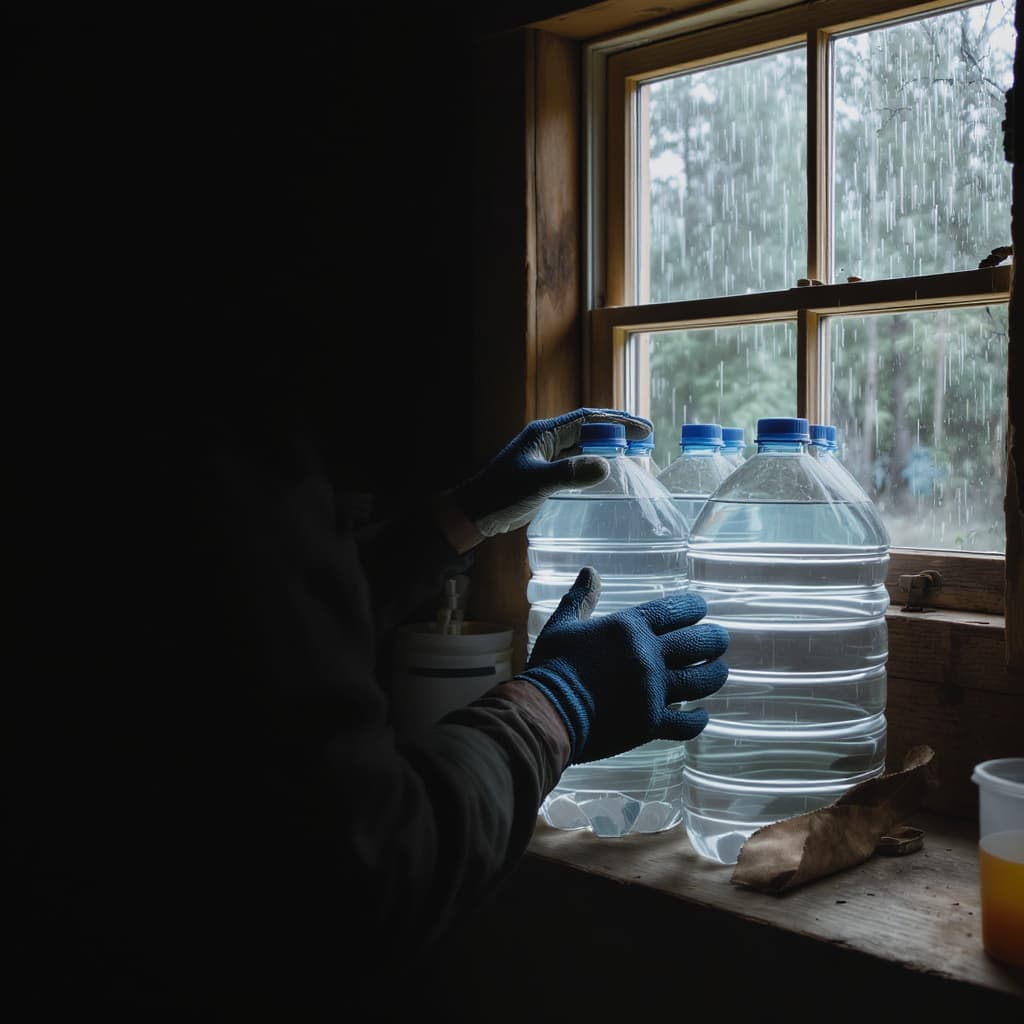
FEMA’s storage guide recommends commercially bottled water for a dependable emergency supply, kept in its original sealed container and used by its expiration or “use by” date. The VA guide also says to replace bottled water based on its expiration date. FEMA water storage guide · VA nutrition guide
For water stored in containers, FEMA recommends food-grade containers, writing the fill date on the outside, and keeping them in a cool, dark place. The booklet says to replace water you prepare yourself every 6 months; its directions for container preparation are in the linked source. FEMA water storage guide
Review the amount and container dates when the household’s needs change. FEMA’s booklet recommends reviewing emergency-kit contents at least once a year or when family needs change. FEMA water storage guide
03 / Treatment
FEMA’s 2004 booklet frames its treatment directions for rare emergencies: when local authorities have not given instructions, no reliable clean source is available, and stored water has been used. It says water of uncertain quality should be treated before drinking, food preparation, or hygiene. Follow current local instructions when they are available. FEMA water storage guide
A stated limit in the source
The booklet says boiling or chlorination can kill most microorganisms, but will not remove heavy metals, salts, or most other chemicals. It cautions that no treatment method is perfect and says methods are often combined. A treatment label or offer detail should not be read as a claim beyond what it actually states. FEMA water storage guide
The VA guide says local health agencies determine whether tap water is safe to use. Check local advisories before relying on a tap-water source or selecting a treatment approach. VA nutrition guide
04 / Product selection
Use the water source and intended use to frame the comparison. FEMA’s treatment guidance explains why method and water-quality claims matter: the booklet distinguishes microorganisms from heavy metals, salts, and other chemicals. Read the product’s own directions and compare only claims that the offer record actually includes. FEMA water storage guide
05 / Published offers
Review the details saved for each relevant, published emergency-water offer. The merchant controls current terms, checkout, and fulfillment.
Reference shelf
Publisher: Federal Emergency Management Agency (FEMA), Ready.gov / U.S. Department of Homeland Security.
Publisher: Nutrition and Food Services, U.S. Department of Veterans Affairs · January 2024.
Publisher: Federal Emergency Management Agency (FEMA) · August 2004.